The Hawelka Legacy: Leopold & Josefine
In May 1939, Leopold Hawelka and his wife Josefine took over the former Café Jeiteles on Dorotheergasse, just steps away from the Graben and Stephansplatz. Shortly thereafter, the outbreak of the Second World War forced its closure until autumn 1945. Leopold and Josefine reopened the café in the devastated city, scavenging firewood by hand in the Vienna Woods to keep the small iron stove burning and roast what scarce coffee beans could be sourced.
During the 1950s and 1960s, Hawelka transformed into the indisputable center of Austrian literature and the visual arts. The Vienna School of Fantastic Realism—including artists Arik Brauer, Ernst Fuchs, and Rudolf Hausner—used Hawelka as their primary studio and salon. Writers such as H.C. Artmann, Friedrich Achleitner, and actor Helmut Qualtinger spent entire nights gathered here, occasionally paying their tabs with sketches and poems when money was scarce.
Acoustics, Patina, and Intimacy
Café Hawelka offers a deliberate, poetic counterweight to the monumental marble palaces of the Ringstraße. There are no soaring arched ceilings or gilded cherubs here; instead, the room is compact, low-ceilinged, and cloaked in a warm, dark amber glow.
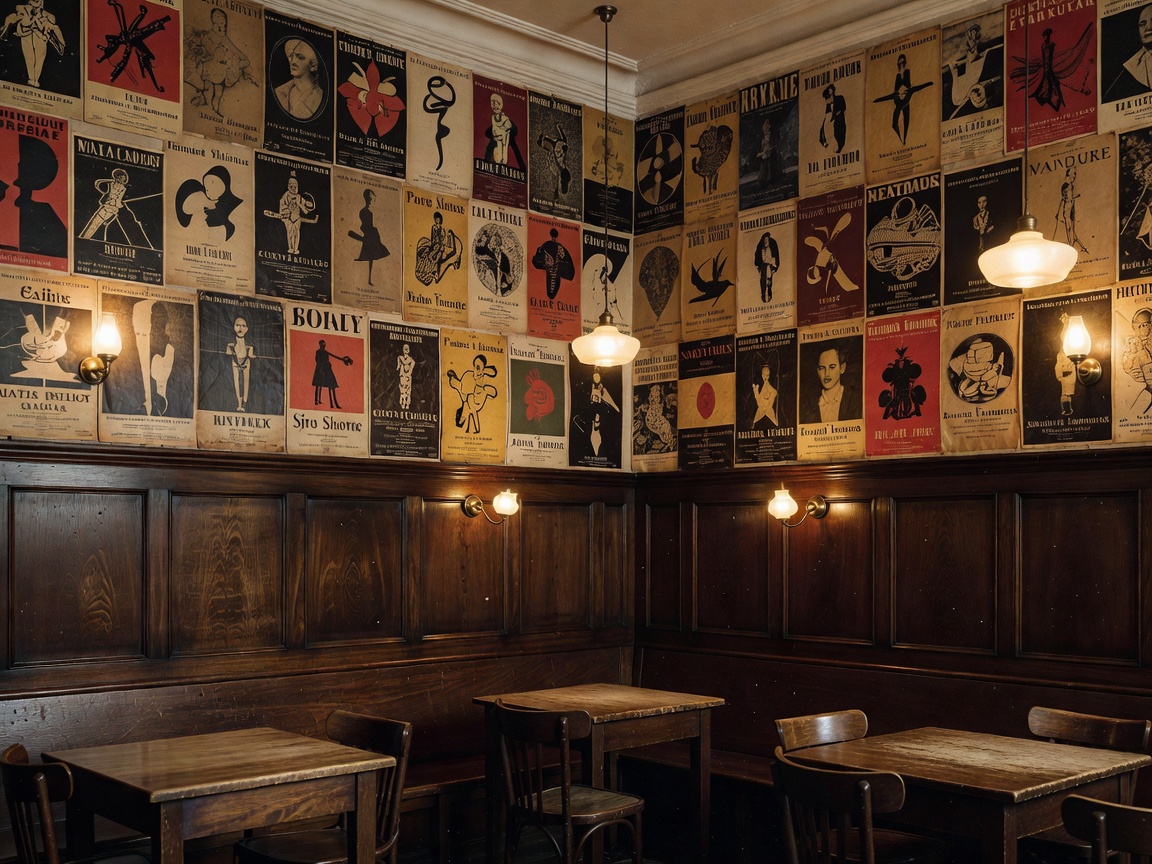
The walls are densely layered with exhibition posters, original lithographs, and vintage playbills accumulated across seven decades. Heavy wooden coat stands bend under the weight of winter woolens. The vintage bentwood chairs have rubbed against one another for generations, wearing down to a soft, tactile patina. The ambient sound is a low, comforting hum of conversation, punctuated only by the clinking of spoons against porcelain and the hiss of the espresso machine.
What to Order: Coffee Roasts and Evening Buchteln
The culinary ritual at Café Hawelka is anchored by a beloved nighttime tradition:
- Warm Hawelka Buchteln: The legendary specialty of the house. Prepared according to Josefine Hawelka’s original recipe, these are pillowy, oven-baked yeast dumplings filled with spiced plum jam (Powidl) and brushed with molten butter. They are served hot, straight from the baking trays, starting precisely at 20:00 each evening.
- Kleiner Schwarzer / Brauner: Hawelka roasts its own proprietary blend in small batches outside Vienna, resulting in a dark, nutty espresso with notes of dried fruit and hazelnut.
- Wiener Melange: Served in rustic brown or white cups with a thick layer of dense milk foam on the signature metal tray.
- Hausgemachter Apfelkuchen: A hearty, homestyle sliced apple cake prepared according to mid-century Austrian family recipes.
Pros, Cons, and Authentic Expectations
Unique Charms
- The most authentic surviving bohemian artistic salon atmosphere in Vienna.
- The legendary warm Buchteln served fresh from the oven every evening at 20:00.
- Still operated with dedication by the direct descendants of the Hawelka family.
- Central location on a quiet cobblestone alleyway just off the Graben.
Important Realities
- The space is intentionally compact and tables sit close together.
- Lighting is dim and atmospheric, designed for intimacy rather than reading.
- Buchteln are only baked for evening service and frequently sell out.
- Peak evening hours may require waiting for an open table.
Visiting Etiquette on Dorotheergasse
Hawelka is an intimate place where sharing a table is customary when seating is limited. If you see a small marble table with two vacant chairs, it is completely standard Viennese etiquette to ask the occupant politely, "Ist hier noch frei?" (Is this seat free?) before pulling up a chair.
Do not look for a printed menu on the table; the waiters continue the heritage practice of reciting available coffees and pastries verbally. If you wish to experience the Buchteln, aim to arrive between 19:45 and 20:15, secure a seat, order your coffee, and wait for the heavenly aroma of freshly baked yeast and plum butter to fill the room as the first oven door opens.